Viser innlegg med etiketten Holocaust. Vis alle innlegg

søndag 2. juni 2013

Dreaded analogy...not so fast.

Here is Coetzee with another take on the dreaded analogy between animal cruelty and the Holocaust, this time in his own voice:
The transformation of animals into production units dates back to the late nineteenth century, and since that time we have already had one warning on the grandest scale that there is something deeply, cosmically wrong with regarding and treating fellow beings as mere units of any kind. This warning came to us so loud and clear that it you would have thought it was impossible to ignore it. It came when in the middle of the twentieth century a group of powerful men in Germany had the bright idea of adapting the methods of the industrial stockyard, as pioneered and perfected in Chicago, to the slaughter – or what they preferred to call the processing – of human beings.
Of course we cried out in horror when we found out about this. We cried: What a terrible crime, to treat human beings like cattle! If we had only known beforehand! But our cry should more accurately have been: What a terrible crime, to treat human beings like units in an industrial process! And that cry should have had a postscript: What a terrible crime, come to think of it, to treat any living being like a unit in an industrial process!
Whether you accept this argument or not depends, at least, on whether you accept the premise that human beings and animals are similar in morally significant ways. (You may admit all the empirical similarities Coetzee draws on even if you don’t, but in that case you are likely to dismiss the moral analogy he draws on the back of these similarities as a non sequitur.) If you accept something along the line of Peter Singer’s idea of the expanding circle of moral concern, then you might concur that treating any living creature as a production unit is similar to treating human beings like that. The moral power of the analogy would presumably weaken as you move further and further away from origo, but as long as you don't overstep the outer boundaries of the circle, it won't loose all power. Inside the circle of moral concern, you can always describe such treatment as a violation against our common creatureliness, or something to that effect. I am prepared to say things like that myself. Though, I am not sure exactly what saying this amounts to. (Nor am I, for that matter, certain where to draw the periphery line.) But it surely entails that no living creature can be treated any way we please. However, the Nazis were not simply refusing certain living beings admission to our community of fellow creatures, they were denying certain human beings admission to our idea of a common humanity too; and that makes a (moral) difference, doesn’t it? On the other hand, one could, as Matthew Pianalto points out, suggest that this question is nothing but further evidence of our inherit speciesism.

Other important differences between factory farming and the Holocaust are also too often overlooked by people who are horror-struck by undeniable similarities. The Nazi crimes were not “merely” to treat living beings as units in an industrial process (nor was it merely to treat human beings this way); the aim of the Nazi’s was to exterminate certain human beings, to eliminate the Jews and to wipe the Earth clean of them. In this respect the (admittedly factory-like) Holocaust didn't much resemble factory farming. Extermination camps were launched as the final solution to the Jew problem. With the problem finally solved, the murders would have stopped too simply because there would have been no one left alive. The industrial stockyard aims at something altogether different: it aims for eternity. Factory farming is a perpetual enterprise, where animals are ceaselessly being brought into the world for the purpose of being killed, to paraphrase Elizabeth Costello. I agree with her that this is a significant difference (though I am not sure I follow her when she claims that factory farming therefore dwarfs any evil the Third Reich was capable of). The extermination camps and the industrial stockyard are strikingly similar in some respects -- in that they employ many of the same methods, for instance --, but the extermination camps were, unlike the modern stockyard, fueled by hatred for their victims and aiming for their annihilation. In this respect the Holocaust was more analogous to a merciless war on vermin than to the merciless meat industry.

Many people disagree with this “dreaded analogy” because (as I have pointed out in the preceding paragraphs) this is far from a perfect analogy; but then again, there is no such thing as a perfect analogy. A perfect analogy simply wouldn’t be an analogy at all. Finding differences doesn’t necessarily undermine the possibility of connecting the dots (that depends on the number and the character of the differences one is talking about). On the contrary, a non-perfect fit is a prerequisite for talking about an analogy between two subjects at all.

"The reasons why the Allies fought against Germany were complex, but many people believe rightly that the Holocaust itself would have proved sufficient reason," Raimond Gaita has written, but “no one can seriously wish to respond, to the slaughter of animals as though it justified taking up arms against farmers, butchers and people who work in abattoirs.” To this I would like to say: in one sense yes, maybe, but in another sense no. "Fighting" is of course a complex term with many applications. Hence there are numerous ways of fighting an evil. It may be true that no one is prepared to shoot and kill farmers and butchers (though, as I pointed out here, whatever truth there is in this, it is hardly of the empirical kind), but many people do walk the streets daily in protest against what butchers and farmers are doing; they write about it, talk about it; they refuse to be accomplices in the wrongdoings by boycotting their products, and try to convince others to follow their lead. Many people would be very relieved (though, perhaps not as relieved as they were when the Holocaust ended (but, then again, how to compare?)) if the horrific treatment of animals that Coetzee describes were to come to an abrupt end. Boycotting and walking the streets in protest is, of course, not the same as taking up arms, but may still be an analogous reaction.

What troubles me with expressions like “animal holocaust” or “eternal Treblinka” is not that one rhetorically bridges a gap between two kinds of horror, but, rather, that one steps too quickly from one to the other as if there were no gap there at all. Stuart Rachels does so with this one-liner. Seemingly blind to all the important differences, such rhetorical moves strike me as both insensitive and unthinking. That being said, I do not think it is impossible to connect the two phenomena in reasonable and non-offensive ways. Consider this quote by Wittgenstien:
Supposing you meet someone in the street and he tells you he has lost his greatest friend, in a voice extremely expressive of his emotion. You might say: "It was extraordinarily beautiful, the way he expressed himself." Supposing you then asked: "What similarity has my admiring this person with my eating vanilla ice and liking it?" To compare them seems almost disgusting. (But you can connect them by intermediate cases.) (Lectures on Aesthetics, II, §4)
Is this analogous (!) to our own question? I suggest that it might be. People may of course be divided over how many intermediate steps one needs (and what steps they must be) in order to make the connection, but if one can, through sensitive employment of intermediate cases, connect one's delight in someone's expression of sorrow with one's delight in eating vanilla ice cream, then, I believe, one can also, as Coetzee (to my mind not quite successfully) attempts to do, namely to draw the connecting line from people's horror in face of the Holocaust (the murdering of human beings on an industrial scale in order to get rid of them) to his own horror in face of modern food industry, where billions upon billions of living beings are being turned into production units in order to be slaughtered and used for food, without behaving disgustingly.

onsdag 29. mai 2013

Simply tasteless?

I have just finished watching the TV series Holocaust. This is widely regarded as a classic, and has won several awards. But to me it was just another typical family drama, albeit set against an untypical historical background. The historical circumstances is, of course, the main "attraction" here, but, disappointingly, they are too often unconvincingly depicted.

The quality of the acting is, given the line-up of famous actors, surprisingly poor (with Michael Moriarty as the cold and creepy Erik Dorff as an honourable exception). Lack of visual despair sometimes makes it look as though the harassment never really bother the Jews. The dialogues are sometimes very awkward. From time to time the characters say things in the interest of the audience; they explain things that must be obvious to anyone in their vicinity, but which the uninformed TV viewer may not be aware of. Worse still is the apparent lack of interest for accuracy. The concentration camps seem wholly unreal. While Primo Levi's inmates are reduced to bundles of primal instincts, the Jews in this version of Auschwitz discuss their terrible lot with sometimes pompous phrases. Everything looks too clean and too healthy too. When seeing well nourished prisoners in pristine looking outfits slaving day in and out under backbreaking labour without a single drop of sweat on their faces, the only thing that kept me from laughing was the sheer injustice of it. Throughout the nine hours I was neither moved nor shocked once, except for when historical footage appeared on screen. The brutality simply was not brutal enough and the suffering not nearly deep enough.

The makers of Holocaust seem to me to have been either too ambitious, in wanting to show all sides and sites of the Holocaust, or not quite ambitious enough, in wanting to do so using only a limited number of characters. As in my childhood's favourite TV series, Once Upon a Time...Man, where the history of mankind is illustrated from the point of view of a group that is always composed of similar recurring figures, the handful of characters in Holocaust simply turn up at too many significant points in history for the story to be credible.

tirsdag 14. mai 2013

The horror! The horror!

"The reasons why the Allies fought against Germany were complex, but many people believe rightly that the Holocaust itself would have proved sufficient reason," Raimond Gaita writes in The Philosopher's Dog:

But ... no one responds, and I think no one can seriously wish to respond, to the slaughter of animals as though it justified taking up arms against farmers, butchers and people who work in abattoirs. That can hardly be irrelevant to how we should understand the moral character of our indifference to the slaughter of animals. It must also inform the moral character of any other analogies we may be tempted to draw between the Holocaust and our treatment of animals.

This is an important warning, I think, whenever one, for whatever reason, is tempted to make that comparison. Recently, both Duncan Richter and Matthew Pianalto have blogged about this dreaded comparison. In his post, Richter criticises Stuart Rachels for discussing this question without referring to the works of J.M. Coetzee. I am not going to make the same mistake, but start by quoting from Elizabeth Costello, the novel Rai Gaita is writing about:

It’s that I no longer know where I am. I seem to move around perfectly easily among people, to have perfectly normal relations with them. Is it possible, I ask myself, that all of them are participants in a crime of stupefying proportions? Am I fantasizing it all? I must be mad! Yet every day I see the evidences. The very people I suspect produce the evidence, exhibit it, offer it to me. Corpses. Fragments of corpses that they have bought for money.

It is as if I were to visit friends, and to make some polite remark about the lamp in their living room, and they were to say, “Yes, it’s nice, isn’t it? Polish-Jewish skin it’s made of, we find that’s best, the skins of young Polish-Jewish virgins.” And then I go to the bathroom and the soap wrapper says, “Treblinka – 100% human stereate.” Am I dreaming, I say to myself? What kind of house is this?

Yet I’m not dreaming. I look into your eyes, into Norma’s, into the children’s, and I see only kindness, human kindness. Calm down, I tell myself, you are making a mountain out of a molehill. This is life. Everyone else comes to terms with it, why cant’t you? Why cant you?

"The force of [this] passage," comments Gaita, "is in its rhetoric rather than in its moral clarity":

Or, at any rate, when I step back to assess critically its undeniable power, I find nothing in it that would make me revise my claim that I cannot, and that I know no one else who can, respond to the killing of animals as though it were mass murder. The analogy Costello draws is, I believe, foolish and also offensive ... because we do not and cannot respond to what happens in the abattoir as we respond to murder.

By labeling a text “unclear” we often mean to say that the text is riddled by confused or inconsistent thinking: As no one is prepared to take up arms against farmers and butchers, as many were against the Nazis, then it is foolish to draw the analogy between animal slaughter and the Holocaust. This is at least a part of Gaita’s critique. But I am not convinced. I am not convinced that Costello is making a (morally confused) argument from analogy to the effect that similar reactions are called for in the case of slaughterhouses as it were in the case of Treblinka; I am not sure there is an argument here at all. I am more inclined to read Costello as reporting about her own difficulties with modern animal husbandry, and how this uneasiness is alienating her from family and friends, who do not share her view on the human-animal-relationship. Costello seems to oscillate between agreeing that people’s animal consumption is perfectly ordinary, and thinking this must be a part of a terrible nightmare. Sometimes she too may walk past the butcher’s window without thinking twice about the meat sausages on display, but at other times -- perhaps most times -- she reacts to these things with tremendous force.


It is as with Wittgenstein’s duck/rabbit-image. When you see the duck, the rabbit is hidden from view; when you see the rabbit, the duck is hidden; you cannot focus on both at once; but the hidden figure is always there, and you know that it may re-emerge anytime. Similarly, Costello seems to move easily among people, she recognises human kindness when she sees it, but at the same time she is constantly aware that there is something wrong with these people (“that all of them are participants in a crime of stupefying proportions”), and that this something might come into view anytime and anywhere to overpower her with great horror. Someone might invite her home for tea and a friendly chat, but as she sits down in the host’s beautiful and comfortable leather sofa, the screams from the abattoir might spoil the moment for her. It is understandable (as is testified by the narrative, and by Costello’s use of the phrase “seemingly normal relations”) why this wariness would put strains on her relations with other people.

On my reading, then, Costello’s Treblinka reference is not so much an attempt to compare intensive farming to the Holocaust, as it is an expression of more private associations. Shocked by the pains animals suffer in man’s custody, and angered by indifferent people who are unable or unwilling to share her condemnation of this maltreatment, Elizabeth Costello looks for expressions that can do justice to the intensity of her own revulsion. I believe such expressive use of “the dreaded comparison” to be at least as common among animal activists as genuine attempts to compare factory farming to the Holocaust, and to measure the pains and the horrors against each other. Such attempts do of course exist (for example in the Rachels essay Richter writes about: "To compare industrial farming to the Holocaust, let’s consider the number of victims involved in each."). Some are unquestionably “foolish and also offensive,” to borrow Gaita’s phrase; but I am not convinced, as is sometimes claimed, that you may never draw this analogy.

Earlier I have written that you can compare anything to everything. Comparing the Holocaust to intensive animal agriculture cannot, as some claim, be problematic in itself (whatever that could mean: after all, any comparison must be used one way or another). The crux of the matter is not what you compare to what, but the manner in which you make that comparison. Whether the comparison between animal husbandry and the Holocaust is foolish and offensive depends on what similarities you find, the way in which you make these similarities explicit, and what you hope to achieve by making these similarities stand out.

Though I still believe this is basically true -- there are undeniable similarities that one may point to without acting foolishly -- but I am not sure animal activists ever need to. The point in drawing the analogy (I am thinking of the genuine comparison not the expressive use of it) is not to offend anyone with saying anything (offending or foolish) about the Holocaust, but to make the horrors of factory farming perspicuous to people. But the best way to achieve this, I believe, simply is to report on the horrors that go on behind closed doors. Most people are not indifferent to hearing of maltreated and suffering animals. Only someone with a stony heart would need such reports to be illustrated by "explaining" images from concentration camps in order to get the point. (And if someone truly is unmoved by animal suffering, it is hard to believe that any analogy would make any difference.) This Holocaust rhetoric could possibly give the wrong impression too. What one objects to in factory farming isn't that it shares certain features with the Holocaust. The industrialisation of animal agriculture (and everything that entails: the confinement, the mechanised rough treatment, the ruthless conveyer belt killings in slaughter factories, and so on) isn't worse for resembling the Holocaust in some respects. What is wrong with this industrialisation, after all, isn’t the fact that the Nazis used similar methods, but the character of these methods themselves. What is needed then, in order to show others the evil in it, is not a comparison, but detailed, realistic descriptions of these methods and sensitive reflections on what they entail for the victims, the animals.

torsdag 13. september 2012

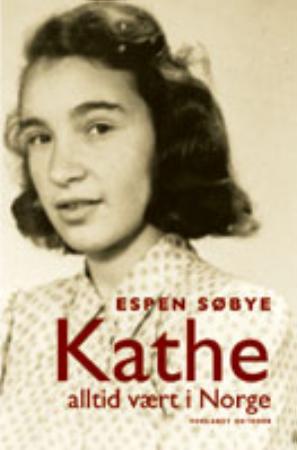
Kathe Lasnik.

Forige uke debuterte jeg i en bokring. Vi skal møtes en gang i måneden fremover for å diskutere en bok alle har lest. Til neste gang skal vi lese Himmelrike og helvete av Jón Kalman Stefánsson. Mitt forslag var, av åpenbare grunner, Steinsamlere av Merethe Lindstrøm. Men Himmelrike og helvete var en av mine favoritter, så jeg er strålende fornøyd.


Dette var første møte etter sommeren, så vi hadde ingen bok å diskutere; i stedet snakket alle sammen om bøker de hadde lest i løpet av ferien. Jeg anbefalte Kathe, alltid vært i Norge av Espen Søbye. Kathe Lasnik var en norsk jødisk jente som endte sine dager 15 år gammel i tysk konsentrasjonsleir. Forfatteren støtte ved en tilfeldighet på hennes navn da han i Politidepartementets arkiv leste seg gjennom alle de såkalte jødeskjemaene fra 1942. Vaskeseddelen:
Samvittighetsfullt har 15-årige Kathe Lasnik, elev ved Fagerborg skole, med skråstilt skjønnskrift svart på Spørreskjema for jøder i Norge. Under rubrikken Når kom De til Norge? har hun skrevet: Alltid vært i Norge. Skjemaet er datert 16. november 1942. Ti dager etter føres hun, faren, moren og en søster om bord på troppetransprtskipet Donau sammen med 528 andre jøder. Den 1. desember er Kathe Lasnik drept i konsentrasjonsleiren Auschwitz-Birkenau. To av søstrene hennes klarte å komme seg til Sverige i tide.
Boken tegner et klart bilde av Kathes historie; hvorfra og når familien Lasnik kom til landet; hvor og når Kathe ble født; hvor hun bodde; når hun flyttet; hvordan det så ut der og da; hvilken skole hun gikk på; hvilke karakterer hun fikk; hvem hun var venner med; hva de gjorde etter skoletid, og så videre. Søbye har gjort et fabelaktig stykke detektivarbeid. Likevel sitter jeg igjen med den nesten paradoksale følelsen av at Kathe Lasnik selv aldri opptrer i sin egen fortelling.

Dette skyldes delvis mangelen på informasjon. Det finnes ganske enkelt ikke mange dokumenter etter en allminnelig norsk 15-åring. Dessuten ble jo sentrale øyenvitner også ble drept, så det finnes få mennesker som kan fortelle noe mer enn det lille som tross alt er dokumentert. Men mest av alt skyldes dette inntrykket Søbyes skrivemåte. Språket er ofte som hentet rett ut av offentlige protokoller. Søbye utbroderer aldri. Teksten er utpreget tråklesøm. Forfatteren tar ingen sjanser. Når han unders på hva slags fritidsinteresser Kathe kan ha hatt, tillater han seg ikke å gjette, men serverer i stedet statistikk over hvilke aktiviteter oslojenter flest drev med på den tiden. Og når Søbye en sjelden gang må gi seg ut på spekulasjoner, gjør han det hypotetiske så tydelig ved bruk av formuleringer som "det kunne...", "kanskje..." og lignende, at selv slike ansatser til bruk av "fri fantasi" bare bidrar til å forsterke følelsen av Kathes fravær.

Dette er slett ikke ment som kritikk. Den nøkterne, tørre og akademiske stilen har hele tiden tiltalt meg. Stilen er tillitvekkende, men fordi Kathe forblir en slags skygge, etterlot lesningen meg med et ubestemmelig savn. Jeg hadde trodd at savnet hadde med forventninger til biografisjangeren å gjøre. "I tillegg til å nevne konkrete hendelser, tar en biografi normalt også for seg følelsene omkring disse hendelsene," skriver Wikipedia. "Biografien skiller seg fra profiler og curriculum vitae (CV) ved at den gir en dypere innsikt i personligheten og ofte er mer intim i sin beskrivelse av personen." Men mens jeg stotrende forsøkte å forklare mine tilhørere at Kathe, alltid vært i Norge neppe er en fullgod biografi, men...(osv)..., fikk jeg en fornemmelse av at det slett ikke var dette jeg ønsket å si. Savnet av en hovedperson med dybde, handlet ikke om biografisjangeren i det hele tatt, men om Kathe Lasnik og hennes skjebne.

På fergekaien i Budapest står det et stort antall tomme sko; et par for hver av de mange jødene som ble borte nettopp her, da de seilte inn i døden oppover Donau. Bare tomrommet og savnet er tilbake. Dette lavmælte og usentimentale monumentet er det Holocaust-monumentet som har gjort sterkest inntrykk på meg.


Kathe, alltid vært i Norge har lignende kvaliteter. Hovedpersonens bare delvise tilstedeværelse i sin egen biografi, blir symbolsk tung med tanke på måten hun døde på -- i et grusomt forsøk på komplett utslettelse. Ikke sånn å forstå at jeg tror Espen Søbye har vært ute etter denne symbolikken. Han var ute etter å beskrive et liv så sannferdig som kildene tillot, men måten livet blir beskrevet på gjør dette også til en fortelling om tap og savn.

mandag 27. februar 2012

Dyrene og Holocaust, igjen. Denne gangen også Heidegger.

I løpet av helgen leste jeg Martin Cohens Philosophical Tales. Kapitlet om Martin Heidegger slutter med følgende ord.
After the war, Heidegger made only one statement referring to the Holocaust. He equated it with the mechanization of the food industry, saying that “in essence” that was “no different than the production of corpses in the gas chambers and death camps.” Both, he suggests, are examples of “nihilism.”
Cohen liker, som undertittelen på boken antyder, å "avsløre" filosofene, og denne kommentaren må kanskje sees i den sammenhengen. Misforstå meg ikke: Jeg betviler ikke sannhetsgehalten i det Cohen skriver; det stemmer sikkert at Heidegger nevnte Holocaust offentlig kun én gang og da i samme åndedrag som mekaniseringen av moderne matindustri. Martin Heidegger var som kjent medlem av NSDAP i tolv år, fra 1933 til partiets oppløsning ved krigens slutt. Mye tyder på at han var overbevist nazist (skjønt neppe på rasemessig grunnlag); han sa en rekke rystende ting om Hitler, krig og demokrati i sitt år som rektor ved Marburg-universitetet; og han nøt både økonomiske og akademiske fordeler av sitt medløperi. Det "alle" ventet -- i alle fall ønsket -- å høre etter krigen var derfor en angrende synder; man ventet å høre Heidegger oppriktig beklage egne utsagn og uforbeholdent fordømme alle grusomhetene begått av hans politiske venner. Heidegger forble i stedet taus, og den ene gangen han åpnet munnen valgte han altså å se dødsleirene som ett blant mange uheldige uttrykk for den moderne nihilismen. Cohen antyder -- og jeg er enig i -- at dette var feil type kritikk av Holocaust fra Heideggers munn.

Men mange mener at det å sammenligne Holocaust med moderne dyrehold i seg selv er et mistak; man mener at sammenligningen på den ene siden underdriver ondskapen i nazismen, og på den andre overdriver ondskapen i moderne dyrehold.
I den grad denne oppfatningen skjuler seg i Cohens ord om Heidegger, tror jeg han tar feil. Sammenligningen kan utvilsomt være moralsk usmakelig, men Holocaust og moderne dyrehold er neppe per definisjon usammenlignbare størrelser. Dette har jeg skrevet om før (her, her og her). Alt avhenger av hvilke likheter man finner, hva man ønsker å oppnå med å påpeke disse likhetene og hvordan dette gjøres. Jeg kjenner Heideggers uttalelser kun fra Cohens beskrivelse, men slik Cohen refererer dem finner jeg uttalelsene problematiske på alle tre punkter. Men hvis (jeg understreker hvis) Cohen antyder at dette måtte bli resultatet ettersom det var århundrets verste folkemord og moderne matindustri han sammenlignet, er jeg ikke overbevist. For det første, Heidegger er jo slett ikke alene i dette landskapet. Tvert imot er det nokså vanlig, selv blant ofre for Holocaust, å sammenligne nazistenes behandling av jøder og sigøynere med behandlingen av dyr ("De behandlet oss som dyr!"). For det andre er jeg av den oppfatningen at det må kunne la seg gjøre å påpeke de samme likhetene også når målet er å uttrykke sin avsky mot behandlingen av dyr i moderne landbruk, uten at dette automatisk blir en fornærmelse mot nazismens ofre. Men for å unngå denne fallgruven må man selvsagt være klar over at faren finnes.

fredag 26. november 2010

Dyrene og Holocaust, igjen.

Det er bemerkelsesverdig hvor ofte sammenligningen mellom Holocaust og moderne dyrefabrikker dukker opp. Et søk på "Animal holocaust" i Google, gir nærmere to millioner treff. Mange kjenner behov for å trekke slike linjer. De vet ingen bedre måter å uttrykke sin forferdelse på. Andre finner sammenligningen utidig.

Se filmene Meet your Meat og Nuit et brouillard og spør deg selv hva du syns. Kaster filmene lys over hverandre? Er sammenligningen mulig -- og moralsk akseptabel? Spør deg også om det rimeligere, som mange Holocaust-ofre har gjort, å sammenligne Auschwitz med en dyrefabrikk enn, som mange dyrevernere gjør, å sammenligne moderne dyrehold med Auschwitz. Men hvis Auschwitz minner om moderne fabrikkdyrehold, minner vel dyrefabrikkene også om Auschwitz, eller...?

Spiller det en rolle hvilken film du begynner med? Og bør rekkefølgen få innvirke på din moralske reaksjon? Hvis du først tenker på Holocaust er du kanskje mindre stemt for å bli beveget av Meet your Meat? Er det i orden? Hvorfor (ikke)? Hva om du snur rekkefølgen? Kanskje rekkefølgen er likegyldig (for deg)?

Er reaksjonen den samme? Eller lik? Reagerer du med vantro? Spør du hvordan slikt er mulig? Hvordan folk kan finne på å gjøre slike ting? Eksemplene er verken identiske eller like i alle moralsk relevante henseender, men jeg spør: Du finner dem kanskje -- jeg håper det -- like i følgende betydning: At det du får se er (for å sitere åpningen av Meet your Meat) "beyond your worst nightmare"?

mandag 22. november 2010

Holocaust, dyrene og industrien.

Det er blitt sagt at det var moderniteten som gjorde Holocaust mulig; Holocaust er et ektefødt barn av det moderne. (Zygmunt Bauman) Nazistene masseproduserte død. Drap etter samlebåndsmetoden. Uten en effektiv arbeidsfordeling -- der mange små operasjoner utføres av like mange operatører -- hadde omfanget av katastrofen aldri nådd slike høyder. En tradisjonell arbeidsorganisering der arbeiderne følger produktet fra begynnelse til slutt, og er vitne til, ja, ansvarlig for hvert trinn i prosessen og for sluttproduktet, hadde vært aldri gitt slike groteske resultater. (Hvilken prosess og hvilket "sluttprodukt" måtte de ikke ha stått til ansvar for!) Lest på denne måten, var die Endlösung der Judenfrage slående lik en industriell prosess.

I sin siste bok, Eating Animals, forteller Jonathan Safran Foer om fremveksten av moderne slakteindustri, der man også produserer døde kropper på løpende bånd.
The pressure to improve upon the efficiency of slaughter and processing came in part as advances in rail transport, such as the 1879 invention of the refrigerator car, allowed for increasingly large concentrations of cattle to be brought together from ever-farther distances.
Henry Ford regnes ofte som historiens første virkelig moderne fabrikkant -- ja, som skaperen av moderne industri. Ford er mannen som oppfant samlebåndet. Men i følge Safran Foer var det disse slaktefabrikkene -- arbeidsmetodene der -- som satte ham på tanken. "Putting together a car is just taking apart a cow in reverse." (s.104)

Adolf Hitler skal ha vært en stor beundrer av Henry Ford. Hva skal vi tenke om det? At nazistene lærte sine metoder av Ford som lærte dem av slakteren? Er dette noe å tenke over? Hvordan skal vi i så fall tenke? (Det er ikke innlysende -- skjønt fristende å tro -- at likhetene med Holocaust sier mer om moderne kjøttindustri enn likhetene med bilindustrien gjør. Men også denne likheten sier en hel del. Ja, enhver kobling til industri sier i det hele tatt ganske mye om dyrenes status i moderne matproduksjon.)

fredag 19. november 2010

Comparing factory farms and the Holocaust.

(This is a slightly improved version of a comment I made to a text by Duncan Richter on his blog, Language goes on holiday. The passage I'm commenting on is the following:
He [Stanley Cavell] questions whether anyone not crazed could make such a comparison.  I think they could.  It's true that there are obvious and crucial differences, and that making the comparison risks insulting the victims of Nazi genocide.  But ignoring the similarities also risks being insensitive to what they suffered.)
I've also been puzzled by the claim that it would be crazy to compare factory farming to the Holocaust, or that you never should or even that you cannot make such a comparison. Of course you can. You can compare any two things you like. Whether it would be morally offensive, crazy or unintersesting to do so, is to a large extent a question of what you're trying to do with the comparison. Sure, we've seen some crude examples of this, from both racists and animal activists, but the problem isn't that they find similarities between factory farming and the Holocaust, but what kind of similarities they see and the point they're trying to make with them.

I think we can compare what's happening on modern farms with the concentration camps in order to make some points -- in order to drive the horror (at both places) home, say, without necessarily offending anyone. Many victims of the nazis have indeed done this themselves. They've lamented that the nazis treated them like slaughter animals. A description, I guess, most people don't find crazy at all, but spot on.

If you, on the other hand, are unaware that this is an emotional and moral mine field and simply imply that the two instances are identical in every (morally) relevant sense -- or perhaps you are aware and still make this claim -- you're sure to offend a lot of people. This would perhaps be crazy, and you shouldn't do it. It would be an insult the jews, an exaggeration (or a misframing) of the wrongness of what we're doing to animals, or both.